




Holsters in wet environments rarely fail from a single exposure. Most problems develop over time through repeated moisture exposure, drying cycles, trapped debris, and gradual corrosion. Even if the holster dries afterward, repeated exposure still creates wear over time.
So whether you’re carrying while fishing, hiking, boating, or simply dealing with hot-weather sweat, understanding what typically fails first can help you spot problems before they affect retention, comfort, or long-term reliability.
How Wet Conditions Change Holster Performance
Most holsters in wet environments do not fail all at once. Problems usually start in smaller areas that see the most moisture, friction, and movement.
The type of moisture also matters. Freshwater creates problems through trapped moisture and debris buildup, while saltwater accelerates corrosion and hardware wear much more quickly. Sweat is just as demanding because it combines moisture, salt, body heat, and daily exposure.
Hardware and Fasteners Often Fail First
Hardware is usually one of the first places where wet environments start causing problems.
Screws, mounting points, clips, washers, and retention hardware collect moisture, sweat, and debris. Saltwater and heavy sweating speed this up because salt continues to pull moisture into small contact areas long after the surface appears dry.
Over time, you may notice:
- Surface corrosion
- Loosening fasteners
- Rust around screw heads or clips
- White salt buildup around hardware
- Increased movement at attachment points
Repeated movement also adds stress to mounting areas. Hiking, climbing, rowing, wading, and long days on the water shift the holster during movement. If hardware begins loosening at the same time moisture exposure increases, wear tends to accelerate.
Retention Consistency Changes Over Time
Retention problems in wet conditions are not always caused by water alone. Sand, grit, silt, and dirt can work their way into retention areas during hiking, fishing, hunting, or river use. Once trapped inside, those materials create extra friction and uneven wear during every draw and reholster.
Moisture also changes how debris behaves inside the holster. Wet grit tends to cling to surfaces longer instead of falling free.
Over time, this leads to:
- Uneven retention wear
- Inconsistent draw pressure
- Rougher reholstering
- Abrasion around contact points
Some users first notice this as a “different feel” during the draw rather than obvious damage. The holster may begin feeling tighter in some spots, looser in others, or less predictable overall. Repeated wet-and-dirty exposure tends to accelerate these changes much faster than occasional rain exposure alone.
Moisture Trapped Around the Firearm Creates Hidden Problems
One of the biggest problems with wet carry conditions is trapped moisture that remains hidden even when the holster’s exterior appears dry.
Sweat, river water, rain, and humidity can collect between the holster and the firearm. In some cases, moisture remains trapped around contact points, especially during long periods of carry or when gear is stored before fully drying.
That prolonged contact increases the risk of:
- Salt residue buildup
- Corrosion around metal contact areas
- Debris collecting between the holster and firearm
This becomes more important in hot-weather carry because sweat exposure can last for hours. Even without full immersion, daily sweat saturation creates constant low-level moisture exposure around the firearm.
Saltwater environments make this even harder on equipment because leftover salt residue continues attracting moisture after the initial exposure ends.
Comfort and Carry Stability Break Down
Wet conditions also affect how stable and comfortable a holster feels during movement. Saturated materials become heavier, softer, or less stable depending on the holster design and material combination.
Even small changes in stiffness or fit affect how the holster moves during walking, climbing, wading, or repeated bending.
You might notice:
- Slipping against wet clothing
- Increased shifting during activity
- Pressure points or friction hotspots
- Less consistent positioning during the draw
- Chafing during long periods of movement
For people using holsters for hiking, fishing, or extended outdoor activities, carry stability matters just as much as moisture resistance. A holster that constantly shifts under load becomes harder to carry comfortably for long periods.
Holster Materials Handle Moisture in Different Ways
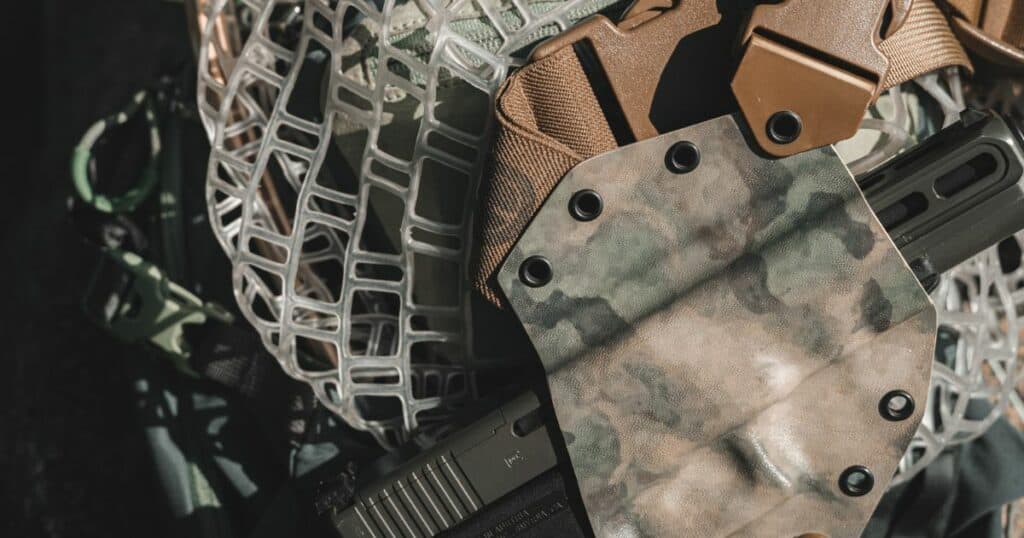
Different holster materials respond to wet environments in very different ways. A setup used for daily sweat-heavy carry experiences is completely different from one used for occasional river crossings or coastal fishing trips.
Kydex and Rigid Thermoplastics
Kydex and other rigid thermoplastics are popular for wet environments because they do not absorb water the way fabric or leather can.
After exposure to rain, river water, or sweat, the material itself typically dries quickly and maintains its overall shape. Retention consistency also tends to remain more stable during repeated moisture exposure because the material does not soften significantly when wet.
Rigid thermoplastics also make it easier to rinse out sand, dirt, mud, or salt residue after outdoor use.
That said, water resistance does not eliminate the need for maintenance. Debris can still collect inside retention areas, especially during hiking, fishing, or muddy river use. Grit trapped inside a rigid holster increases abrasion on both the holster and firearm during repeated draws.
Drainage also matters. Some holster designs shed water and debris more effectively than others, particularly in environments involving repeated immersion or heavy rainfall.
Many outdoor-focused Kydex holsters are designed with these considerations in mind. For example, chest-mounted systems like the Kenai Chest Holster place the firearm higher on the body, helping it avoid the constant splashing, mud, and immersion that occur during fishing or river crossings.
Leather
Leather responds to moisture very differently because the material naturally absorbs water over time. During repeated exposure cycles, leather retains moisture longer, especially in humid environments or during sweat-heavy carry.
If the holster remains damp and does not fully dry, the material begins to change shape or soften in high-contact areas. As leather stretches or softens over time, retention characteristics gradually change as well.
Salt exposure makes this even harder on the material. Sweat and saltwater both leave behind residue that dries the leather and increases stiffness or cracking if the holster is not cleaned and conditioned properly.
Leather also tends to trap moisture against the firearm longer than rigid thermoplastics, especially during extended outdoor carry.
That does not automatically make leather unusable in wet conditions. Many users still prefer leather for comfort and flexibility. But repeated moisture exposure requires more maintenance attention and longer drying afterward.
Nylon Holsters and Fabric-Based Systems
Unlike rigid materials, fabric absorbs and retains water throughout the material. After rain, sweat exposure, or immersion, nylon holsters often stay damp longer and hold moisture inside seams, padding, or layered backing materials.
Fabric systems also tend to collect sand, mud, silt, and organic debris more easily during outdoor use. Once embedded into stitching, folds, or soft backing materials, debris is harder to remove.
Repeated wet-and-dry cycling also affects flexibility and structural stability over time. Some nylon holsters may soften, sag, or shift more during movement after heavy, long-term exposure.
At the same time, many users still prefer nylon systems for lightweight carry, flexibility, and comfort during hiking or general outdoor activity. In those situations, maintenance and drying habits often become more important than the material alone.
Material Choice Depends on Exposure Type
The best holster material often depends more on the type of exposure than the environment itself.
For example:
- Sweat-heavy carry often stresses hardware and backing materials first.
- River environments usually increase debris and abrasion.
- Coastal carry tends to accelerate corrosion and salt buildup.
- Humid climates create longer moisture retention and slower drying cycles.
This is why long-term outdoor holster performance depends on the full system, not just the base material. Retention design, hardware quality, drainage, cleaning habits, and drying practices all affect how a holster handles repeated moisture exposure.
How to Reduce Long-Term Moisture Damage
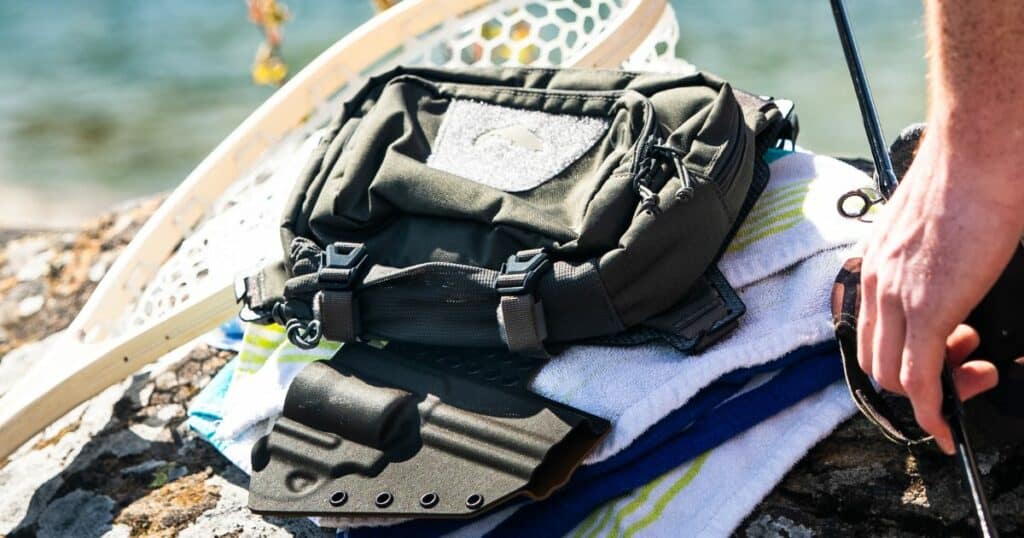
Outdoor holsters do not need to stay perfectly dry to remain reliable long term. Most moisture-related problems become manageable when buildup, trapped debris, and corrosion are addressed early.
Rinse Saltwater Exposure
Even after the surfaces dry, the leftover salt residue continues to attract moisture from the air. That ongoing exposure accelerates corrosion around screws, clips, mounting hardware, and firearm contact points.
So saltwater exposure should be cleaned off as soon as possible after use.
- Clean the holster with fresh water
- Flush debris from retention areas
- Rinse around screws and mounting hardware
- Remove visible salt residue
- Allow the holster to dry fully
Dry Equipment Before Storage
Moisture causes more long-term problems when equipment is left trapped in enclosed spaces after use. Packing damp holsters into bags, vehicle compartments, storage bins, or sealed cases holds moisture against hardware and contact surfaces for hours.
Instead, allow equipment to dry with good airflow before storing it. Focus on drying:
- Around screws and mounting hardware
- Behind clips and attachment points
- Inside seams or fabric layers
- Contact areas between the holster and firearm
Remove Trapped Debris
Outdoor environments constantly push debris into holsters during normal movement. Sand, mud, silt, and organic material all collect inside retention areas and contact surfaces during hiking, fishing, hunting, or river use. Once trapped inside, that material continues creating abrasion during every draw and reholster.
When cleaning a holster, pay attention to:
- Retention channels
- Trigger guard contact areas
- Mounting points
- Seams and corners
- Hardware contact surfaces
Inspect Hardware and Retention
Outdoor carry systems benefit from regular inspection, especially after exposure to moisture. Hardware often shows wear before the holster body itself, and regular inspection helps catch small problems before they affect carry performance.
Check for:
- Loosening fasteners
- Corrosion around screws or clips
- Salt buildup
- Mount wear
- Changes in retention consistency
It is also a good idea to verify that mounting hardware remains tight after long hikes, repeated movement, or heavy outdoor activity.
Test Holster Performance After Heavy Exposure
After heavy rain, full immersion, muddy conditions, or saltwater exposure, test the holster before returning it to normal carry use.
Pay attention to:
- Draw consistency
- Retention feel
- Reholstering smoothness
- Mount stability
- Unexpected shifting during movement
Many retention problems develop gradually and feel subtle at first. A quick function check after cleaning and drying helps confirm the holster is still performing before the next trip outdoors.
Moisture Is Only Part of the Story
A holster does not need to stay perfectly dry to remain reliable. It needs to recover well after exposure. Cleaning out debris, thoroughly drying equipment, inspecting hardware, and checking retention help prevent many of the problems that wet environments create.
Explore GunfightersINC Kenai Chest Holster and other outdoor holsters designed for fishing, hiking, and challenging outdoor conditions.
1 Comment
Leave a Comment
June 15, 2026
Very in-depth comprehensive article. Enjoyable reading. Thorough empirical base information.