




Chest vs hip carry matters more when you’re fishing than almost anywhere else. You’re not standing still. You’re moving, casting, stepping through water, and managing gear at the same time.
Because of this, your carry method needs to work with your system. The right setup stays clear of your line, accessible when you move, and doesn’t interfere with the gear you rely on.
Chest Carry and Fishing
Chest carry places your firearm high on your torso, usually across your upper chest. It keeps the gun above your beltline and out of the way of your legs and hips. For fishing, that placement solves a lot of the problems you run into with movement, water, and gear.
Most chest holsters sit along your centerline or slightly off to your dominant side. The grip stays in front of you, where your hands naturally move. This helps when you need a clean, direct draw without extra motion.
Chest carry also sits higher than your waders, belt, or pack waist strap. That keeps the firearm clear of anything wrapped around your hips and avoids interference when you’re layered up.
This position also keeps the holster from getting pinned under pack straps or buried behind other gear.
Why Chest Carry Is Popular for Fishing
- Stays clear of water. When you step into deeper water, your chest stays dry longer than your waist. That helps keep your firearm protected and avoids constant exposure.
- Accessible in any position. Whether you’re standing in current, kneeling near the bank, or sitting to tie a fly, the firearm stays in front of you and within reach.
For many anglers, chest carry becomes the default because it works with how you move.
Hip Carry and Fishing
Hip carry places your firearm on your waist, usually along your dominant side. It’s the setup most people are familiar with because it mirrors everyday belt carry. For fishing, it can still work well, but only in the right conditions.
Hip carry relies on a solid mounting point around your waist. The holster attaches to your belt, keeping the firearm at your side in a consistent position. With a stable belt, the draw stays predictable and easy to repeat.
This setup works best when your belt isn’t crowded with other gear. Once you add packs or layers, space gets tight.
Where Hip Carry Fits in Fishing Setups
- Works with minimal gear setups. If you’re carrying light, hip carry stays accessible and out of the way.
- Best for bank or shoreline fishing. When you’re staying on dry ground, you don’t have to worry about submerging your holster. That makes hip carry a more practical option.
Hip carry feels natural and low-profile. But once you add water, movement, and gear into the mix, it starts to compete for space.
Chest Carry vs Hip Carry
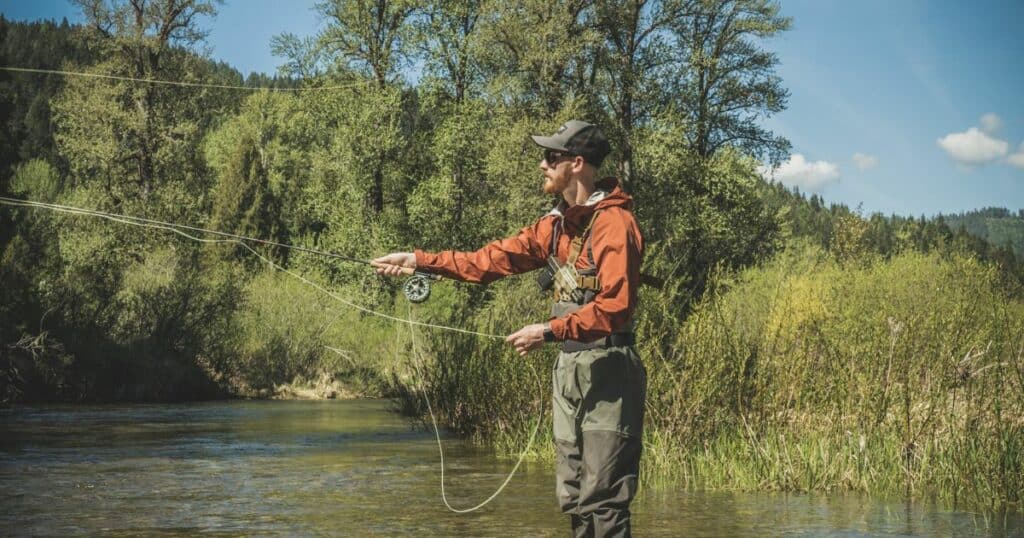
Both setups can work. The difference comes down to how they behave once you’re in the water, moving, and managing gear.
| Factor | Chest Carry | Hip Carry |
| Access While Wading or Casting | Stays consistent in all positions: standing, kneeling, or sitting. The firearm remains in front of you and easy to reach. | Changes with stance and water depth. The grip can shift, get covered, or become harder to reach. |
| Interference With Fishing Gear | Sits higher on your torso, which helps keep it clear of your hands and fly line when positioned correctly. | Sits where line often gathers. More likely to cause snags during stripping or casting. |
| Compatibility With Packs, Vests, and Waders | Works well with chest rigs and systems like the Bino Link. Stays above belts and avoids strap conflicts. | Competes for space with wader belts and pack waist straps. Can get crowded or pinned. |
| Comfort During Long Days | Weight is distributed higher across your torso, which often feels more stable during movement. | Familiar at first, but can shift, press, or rub over time, especially on uneven terrain. |
In the end, the better option is the one that stays consistent, stays clear of your gear, and doesn’t slow you down while you fish.
Drawing Safely Without Tangling or Bending
On the water, your draw has to work around your rod, your line, and your footing. The goal is a clean, repeatable motion that avoids snags and keeps the firearm controlled from start to finish.
Chest Carry
The draw path stays higher and more direct. It clears the waterline and most of your gear, which helps reduce contact with your rod or loose line. Because the firearm is in front of you, your movement stays compact and easier to control.
Hip Carry
This setup can still work, but it takes more awareness. Your rod often crosses your body, and your line may be hanging near your waist. That means you need to manage your body angle and hand position to avoid tangling or bumping into gear during the draw.
No matter which position you choose, one thing matters more than anything else: consistency over speed. Rushing the draw in a fishing setup usually creates problems. A steady, practiced motion is what keeps it safe and reliable.
Gear That Supports Each Carry Style
The right holster works with everything else you’re wearing on the water. Packs, waders, straps, and movement all play a role.
Chest Carry
Kenai Chest Holster
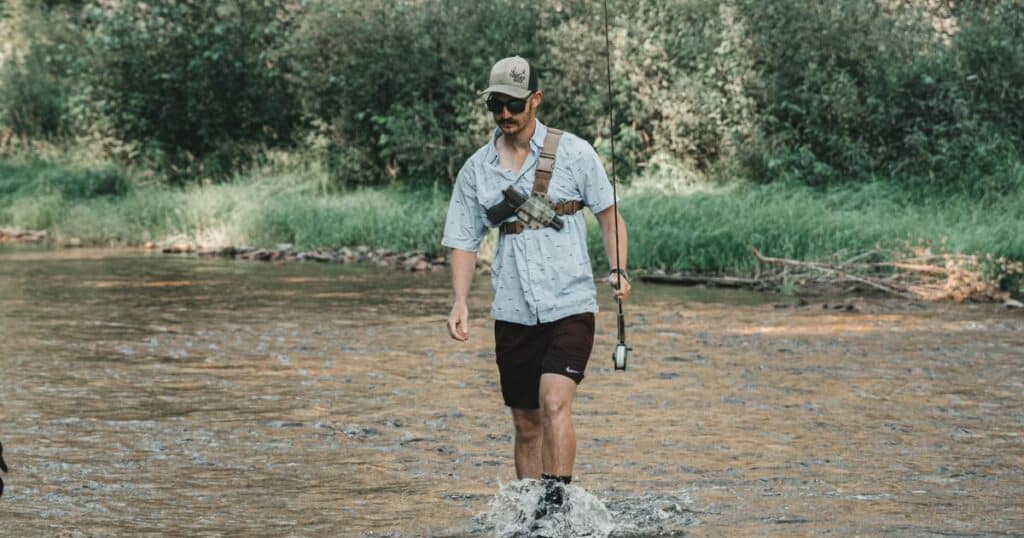
Built for situations where your waist is already in use. It keeps the firearm high, stable, and accessible without interfering with wader belts or pack straps. That matters when you’re moving through water or frequently adjusting position.
Tackle-Link Holster
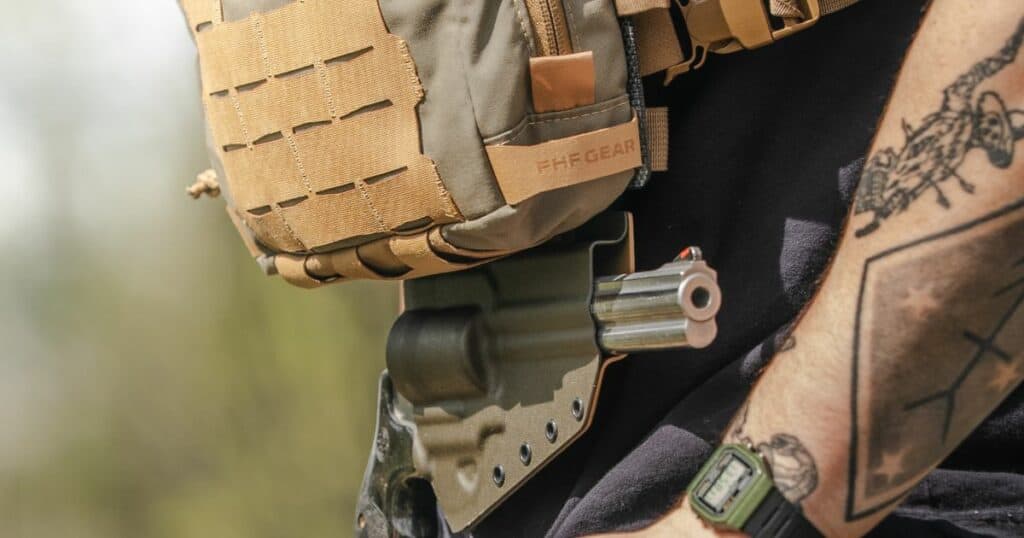
Designed specifically for fishing setups, this lets you integrate your holster with chest packs or tackle systems. It keeps your firearm secure and accessible without interfering with your casting motion or line management.
Bino-Link Holster
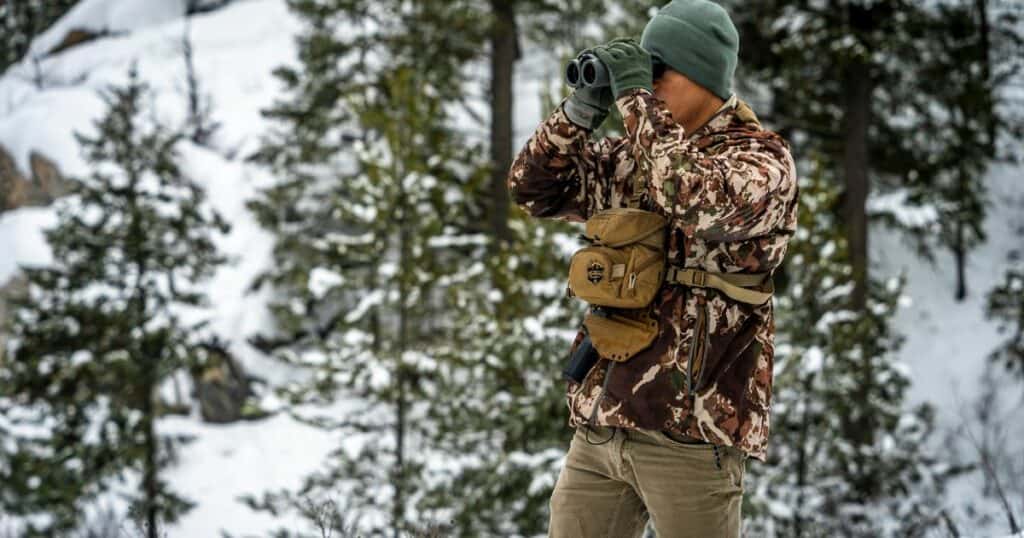
For anglers running binocular harnesses, this kind of system helps organize everything across your upper body. Instead of stacking gear in one spot, it spreads it out so your draw path stays clear and your line has fewer places to catch.
Hip Carry
Ronin OWB Concealment Holster
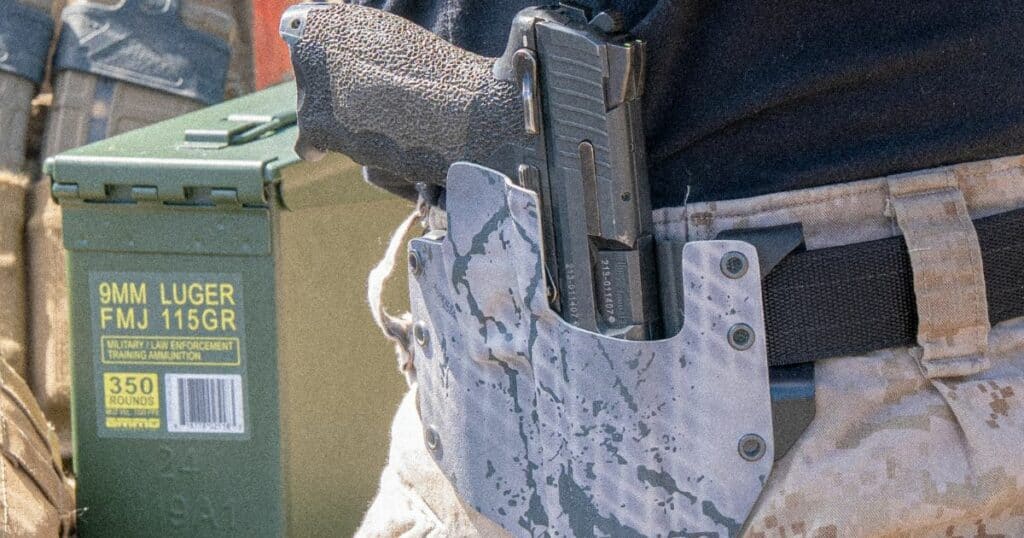
A solid option when your waist area is open and uncluttered. It keeps the firearm in a familiar position and works well for shoreline fishing or lighter setups where you’re not dealing with deep water or heavy layering.
Choose the Setup That Works With Your Fishing Style
What matters most is this: Your setup should stay out of your way until you need it.
Take the time to test your carry method with your full fishing gear on. Move, cast, and adjust the way you normally would. If something snags, shifts, or feels off, fix it before you’re on the water.
Explore GunfightersINC holsters designed for chest and belt carry so you stay mobile, organized, and prepared on the water.