




Drawing a gun while moving feels different for a reason. And understanding what changes can help you build more realistic practice habits and evaluate whether your holster supports the way you actually move.
3 Things That Change When You Draw While Moving
Drawing while moving is different because movement changes the relationship between your body, your hand, and your holster.
Your Body Position Is Constantly Changing
When you’re standing still, your body stays in a predictable position. As soon as you start walking, climbing, or moving over uneven ground, that changes. Your stride shifts your weight, your torso naturally rotates, and your balance adjusts with every step.
Those movements affect how your hand travels to the holster. Even if the holster stays in the same place, your body may not approach it from the same angle each time. But the goal isn’t to stop your body from moving. It’s to recognize how those natural movements affect your draw so you can build consistent habits around them.
Finding Your Grip Becomes Less Predictable
Because your body is no longer in the same position from one step to the next, finding the grip becomes less predictable. When your body is moving, reaching the firearm the same way every time becomes more challenging because your posture and hand position are constantly changing.
You may notice that your hand lands slightly higher or lower on the grip than expected, or that you need to make a small adjustment before establishing a full firing grip. These are normal effects of movement and not necessarily signs of poor technique.
Your Holster Needs to Stay Put
Your body will move during everyday activities, but your holster should remain as consistent as possible. If it shifts, rotates, or changes position while you walk, run, or climb, the firearm’s location changes with it.
And this forces you to search for the grip instead of directly reaching it. Even small amounts of movement can make the draw feel less predictable because your reference point keeps changing.
A holster that stays stable against your body helps remove that unnecessary variable. It allows you to focus on developing consistent habits rather than adapting to shifting equipment.
Practice Like You Actually Move
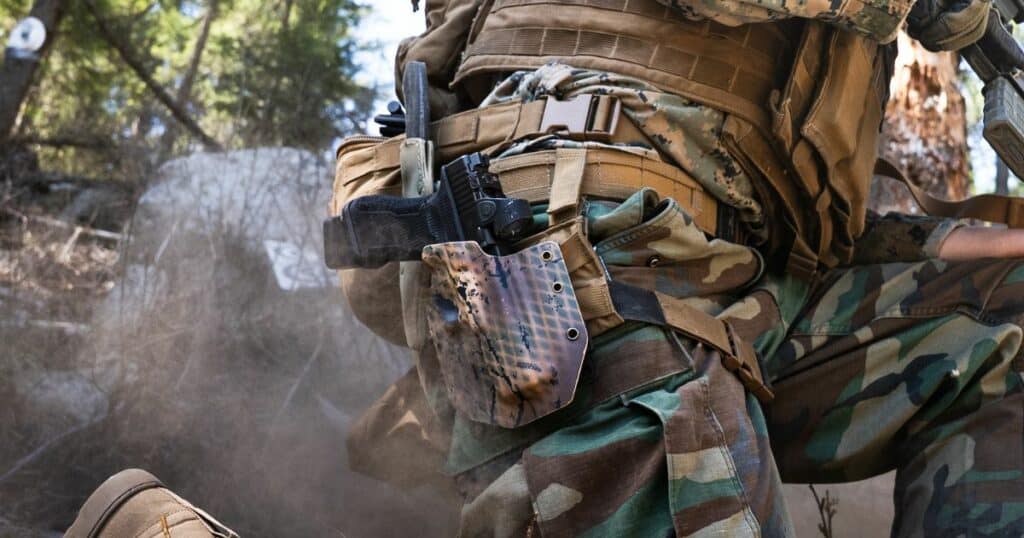
Static range practice is valuable for building safe, repeatable fundamentals, but it only shows part of the picture. If you always practice standing still, you won’t notice how movement affects your grip, body position, or how your holster rides throughout the day.
Once you are confident with the fundamentals, add realistic movement to your training. Walk at a normal pace, bend to pick something up, step over obstacles, or hike with your gear. These activities help you experience how your equipment behaves outside of a controlled range environment.
Plus, those observations can tell you just as much about your setup as they do about your technique. Identifying them during practice allows you to adjust your equipment or training.
Choose Equipment That Removes Unnecessary Variables
You cannot eliminate the effects of movement, but you can eliminate equipment that adds to them. A well-designed holster should remain stable against your body, provide reliable retention during normal activities, and keep the firearm in a predictable position as you move.
| Movement | What Changes | What Your Holster Should Do |
| Walking | Natural body sway and arm movement | Stay in place without shifting |
| Running | More bounce and body movement | Keep the firearm secure |
| Hiking | Uneven footing, bending, and changing terrain | Remain comfortable and accessible |
| Climbing | Reaching, stretching, and body compression | Maintain predictable positioning |
GunfightersINC holsters are designed with that goal in mind. By providing a secure fit, dependable retention, and stable positioning against the body, they help reduce unnecessary movement during activities like walking, fishing, and other tasks.
Build Consistency Through Practice and Equipment
As you practice, pay attention to how your holster performs during the activities you actually do. A stable setup gives you a stronger foundation for drawing while moving with confidence and consistency.
August 17, 2026