




An EDC holster is designed for safe, consistent concealed carry during daily activities. That means it has one job: Hold your firearm securely, keep it accessible, and stay out of your way while you go about your day.
Priorities for Everyday Carry Gear
You’re sitting, driving, and reaching for things. You’re walking in and out of buildings. So your holster needs to stay stable through all of that. When you’re choosing everyday carry gear, focus on four core priorities: concealment, comfort, retention, and draw.
Concealment
Your holster should reduce printing and keep your firearm discreet under regular clothing. This means real-world concealment in jeans, a belt, and a T-shirt. Ride height, cant, and holster profile all matter here.
Concealment vs. Access: The Tradeoff Most Carriers Miss
You usually can’t maximize concealment and access at the same time. Most carriers focus on one and assume the other will follow, but it doesn’t.
The more deeply you conceal, the more layers, pressure, and body contact you introduce. That slows access. On the other hand, the more you prioritize speed and exposure, the harder it is to stay discreet.
Once you recognize the trade-off, you can honestly evaluate your holster: Am I carrying for discretion or for speed and control under stress?
Answer that clearly, and your gear decisions get a lot easier.
Comfort for Long Wear
You’ll wear an EDC holster for hours, so comfort isn’t optional. Sharp edges, hard pressure points, or poor backing material will make you adjust constantly. That leads to inconsistent positioning, draws, and use.
Controlled Holster Retention
Retention should be secure but not excessive. You want the firearm to stay put during movement, but release cleanly during your draw.
GunfightersINC holsters use Level 1 passive retention based on friction. The holster is molded for a proper fit, so the firearm will not come out unless it’s drawn intentionally. The idea is simple: strong, reliable retention without added complexity. Your firearm stays secure during normal movement, but your draw remains clean and consistent under stress.
Read Your Definitive Guide to Holster Retention for a deeper understanding.
Reliable Draw
Your draw needs to be repeatable. The grip should be accessible, and the holster mouth should stay open for safe reholstering. Nothing should collapse or shift during the process. A quick draw holster isn’t about speed alone. It’s also about predictable mechanics.
If your setup doesn’t support those four things, it’s time to reevaluate your holster.
How Your Environment Changes Holster Requirements
The same EDC holster that works in town may not work on a hike. A setup that feels solid at the grocery store can become awkward under a pack or a heavy jacket.
Holster choice isn’t just about the firearm, but also where you carry and how you move.
- City carry prioritizes concealment and comfort.
- Trail carry prioritizes access around gear.
- Backcountry carry prioritizes retention and rapid access under stress.
Urban / Everyday Environment
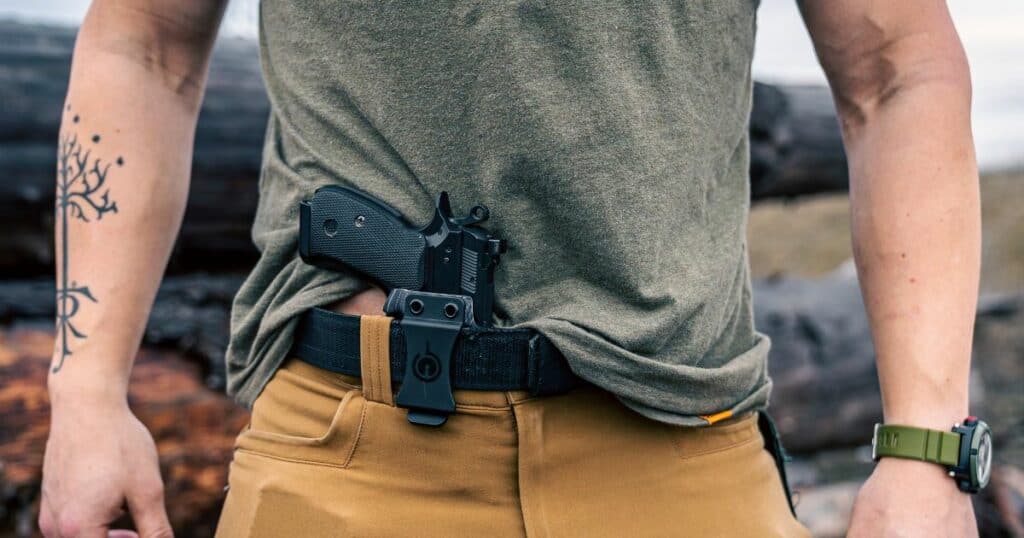
In a city or daily routine, discretion is the priority. You’re around people and in close spaces. You’re getting in and out of vehicles. Your concealed carry holster has to stay low-profile and predictable, which is why many carry an IWB or close-riding OWB concealment holster.
- Discretion matters – A good setup keeps the outline tight to your body. Ride height and cant also help here.
- Low-profile printing – Thinner holsters and clean attachment systems help reduce bulk. This is where many IWB options shine.
- Movement in vehicles – Sitting changes everything. Your holster shouldn’t dig into your hip or shift position when you buckle in. Access should remain consistent without having to adjust your seat or unbuckle.
- Clothing variability – In town, you might wear anything from a light T-shirt to a jacket. Your everyday carry gear needs to work across those changes. Adjustable holster positioning helps you fine-tune concealment without rebuilding your entire setup.
In an urban environment, comfort and concealment drive EDC holster design.
IWB vs. OWB for Daily Carry
Most daily concealed carry falls into two categories: inside-the-waistband (IWB) or outside-the-waistband (OWB).
- IWB holsters sit between your body and your waistband. They’re the most common choice for concealed carry because they tuck the firearm closer to centerline. IWBs work well if you want deep concealment, wear fitted clothing, or prefer a lower-profile setup.
Hybrid IWB designs can add comfort by combining a rigid shell with a supportive backing. For example, the Solace Hybrid IWB uses a structured outer shell for retention while giving you a more forgiving surface against the body. That balance helps during extended wear.
The Wraith IWB takes a more streamlined approach. It’s built for a clean, stable fit and consistent draw, without extra bulk. If you prefer a simpler profile that still delivers strong retention and concealment, this style is a good choice.
- OWB concealment holsters are designed to ride close to the body and disappear under a jacket, overshirt, or loose layer. OWB works well if you want greater comfort at the waistline, spend time seated/driving, or prefer a more natural draw angle.
The Ronin OWB Concealment Holster is built to pull the firearm tight to the body. With the right cover garment, it can conceal effectively while offering the comfort and accessibility many shooters prefer.
Trail and Outdoor Recreation
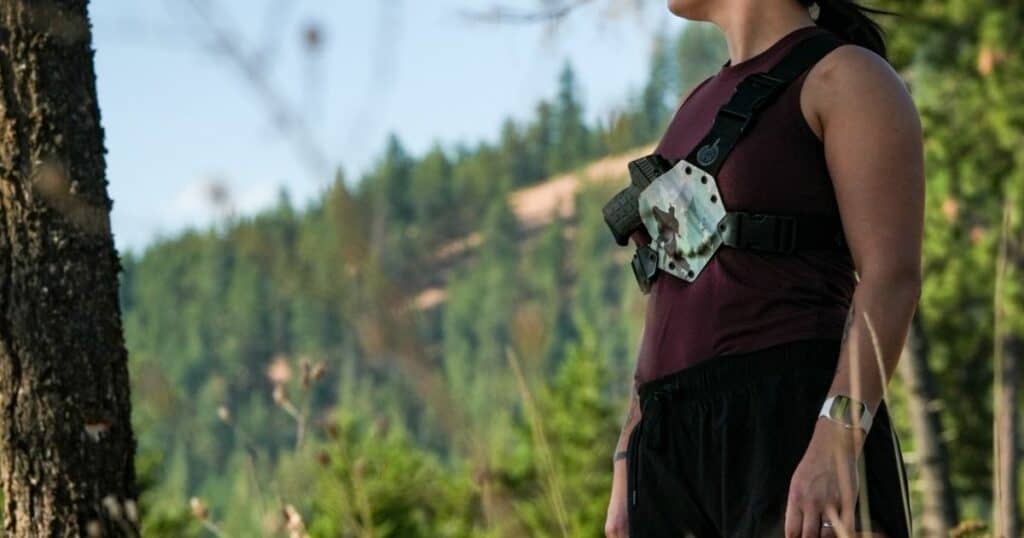
Once you leave pavement, new problems show up. You’re moving more, layering up, and carrying gear. So minimizing interference with your gear is the priority.
- Layered clothing – Base layers, fleece, outer shells changes how you access your firearm. A belt-mounted holster can get buried under zippers and straps.
- Packs and waist belts – A backpack waist belt often sits directly over a traditional EDC belt holster. That blocks access or pushes the firearm into your side.
- Variable terrain – Climbing, scrambling, bending, and stepping over obstacles stress your setup, so retention matters. The holster must keep the firearm stable during uneven movement.
- Access while seated or hiking – If you’re leaning uphill or sitting on a log, can you still get a full firing grip? Many belt setups become awkward in these positions.
For these types of activities, a chest carry holster makes more sense than an IWB or OWB holster.
A chest-mounted system moves the firearm above pack straps and waist belts. It stays accessible while standing, sitting, or hiking. It also balances weight differently, which many users prefer during long days outside.
This is where systems like the Kenai Chest Holster stand out. The firearm rides high, centered, and clear of pack straps. Retention stays strong during movement, and access remains consistent through heavy layers.
Backcountry / Expedition Use
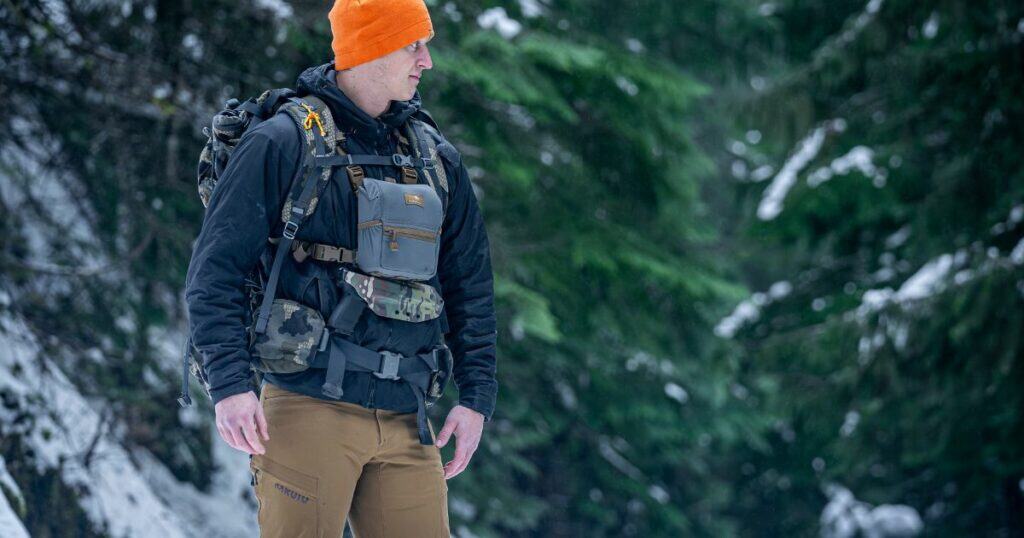
Backcountry carry changes the stakes. Now you’re dealing with remote terrain, heavy outerwear, and, in some regions, large predators. So concealment is low on the priority list, while reliable draw, comfort, and retention should be the focus.
- Heavy outerwear – Thick jackets and rain shells bury a belt-mounted holster. Access becomes slower and less consistent.
- Large predators (bear country) – In certain areas, defensive carry isn’t only about two-legged threats. If you’re in bear country, rapid access and stable positioning matter more than concealment.
- Rapid access under stress – In a high-stress encounter, fine motor skills drop. Your holster needs clear retention, consistent grip access, and no guesswork.
- Higher retention needs – Climbing over deadfall or crossing uneven ground increases the risk of gear snagging or shifting. Your holster must hold firm without sacrificing draw reliability.
In backcountry environments, concealment takes a back seat to function. Many choose a chest rig like the Kenai Chest Holster because it keeps the firearm out of the way of waist belts and heavy outerwear.
But for those running additional chest-mounted gear, the Bino Link Holster and Tackle Link Holster let you integrate the holster with binocular harness systems or other front-mounted equipment. That keeps your setup streamlined and prevents gear from competing for the same space on your torso.
If you want a deeper look at chest carry, retention setups, and what experienced guides and hunters actually use, read Holsters for the Backcountry.
Can One Holster Do It All?
Short answer? Usually no.
Every holster design is a set of tradeoffs. The features that make an EDC holster excellent in one environment often limit it in another.
Some OWB Concealment Rigs Can Bridge Urban and Rural
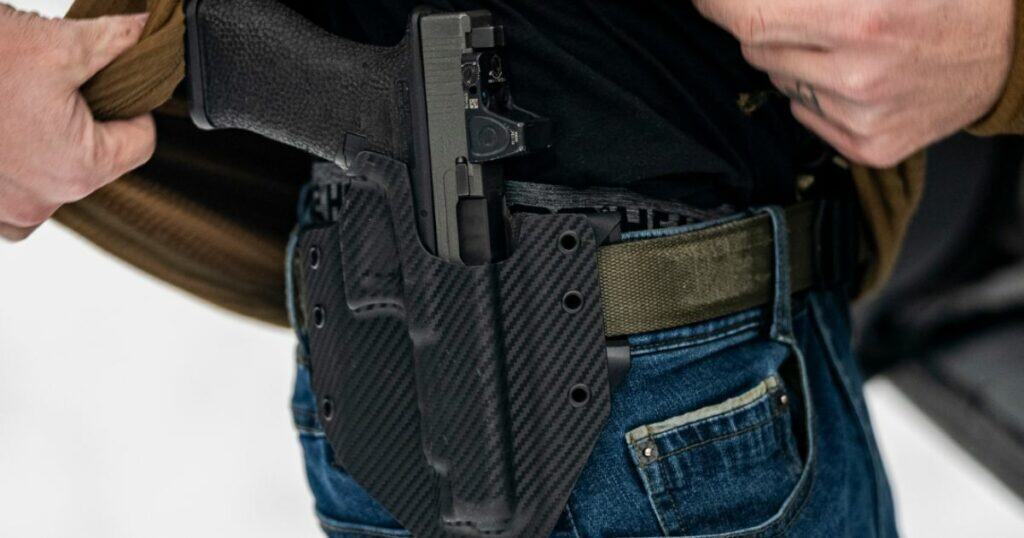
A well-designed OWB concealment holster can handle more than people expect. Close-riding OWB setups:
- Stay comfortable for long wear
- Offer strong retention
- Work well under jackets or heavier shirts
For someone who splits time between town and light outdoor use, this style can bridge both worlds. It may not conceal as deeply as a slim IWB, and it may not be as stable as a chest rig under a heavy pack. But it can do both reasonably well.
A good example of this type of crossover setup is the Ronin OWB Concealment Holster. It’s designed to ride tight to the body for urban concealment, but it still offers the stability and durability needed for outdoor use.
If your lifestyle is a mix of urban and rural environments, a holster like the Ronin is often the most flexible option.
Serious Carriers Run Multiple Setups
Many experienced carriers don’t try to force one holster into every role. They keep separate setups for separate environments.
For example:
- An IWB or OWB concealment rig for daily urban carry
- A chest holster for trail or backcountry use
- Sometimes a shoulder setup for vehicle-heavy work
There’s no single “best EDC holster” for every situation. You wouldn’t use the same boots for the office and a mountain hunt. The same logic applies here.
There’s the best fit for your primary environment. And sometimes, there’s a second setup for when conditions change. Match your gear to your reality, and you’ll end up with a safer, more consistent carry system.
The Best EDC Holster Depends on Where You Carry
If you’re evaluating your current EDC setup, take a hard look at how it performs in your primary environment. If it shifts, prints excessively, interferes with gear, or slows your draw, it’s time to adjust.
Explore the complete lineup of GunfightersINC holsters and choose the configuration that fits how you live, so you build a carry system that stays secure, accessible, and consistent wherever you go.
April 16, 2026