




Cold weather hunting means adding heavier jackets, insulated bibs, and gloves to your usual gear. While these layers help protect you from the elements, they can also change how your holster fits, how easily you can access it, and how securely it holds your firearm.
Here’s what to watch for and how to identify potential problems.
How Does Winter Clothing Affect Holster Fit and Comfort?
Thicker jackets, insulated pants, and extra layers around your waist can change how your holster fits and feels. A setup that’s comfortable during warmer hunts may create pressure points or shift out of position once you add bulky winter clothing.
For example, insulated bibs may interfere with a holster’s mounting hardware, while a heavy jacket can bunch up around the holster when you sit or bend.
These problems aren’t always noticeable when you’re standing still. A holster might feel fine at first, but become uncomfortable when you’re climbing into a tree stand or sitting for long periods.
Before heading out for a cold-weather hunt, consider how your holster fits with all your usual clothing and equipment. Pay attention to pressure points, shifting, or restricted movement. Your holster should remain securely mounted and comfortable throughout the activities you expect during your hunt.
How Do Heavy Layers and Gloves Affect Holster Accessibility?
Winter clothing can make a holster harder to access, even when it fits comfortably. Heavy jackets, loose fabric, and insulated gloves can create obstructions that affect how you handle your firearm safely.
Jackets and Insulated Layers Can Create Obstructions
Long jacket hems and multiple layers of clothing can cover your holster or bunch up around its opening. Loose fabric may also catch on hardware or interfere with the handgun seating fully in the holster.
These obstructions can change depending on your position, so pay attention to loose fabric near the holster opening. Clothing should never interfere with the handgun seating properly, and the holster must fully protect the trigger while the firearm is secured.
Gloves Change How Equipment Feels and Handles
Thick winter gloves can reduce your sense of touch and make small movements more difficult. This can make it harder to recognize when something is interfering with safe firearm handling.
Some gloves may also be too bulky for certain firearm controls. Rather than forcing equipment to work together, check the firearm and holster manufacturers’ instructions for compatibility and safe operation.
Never modify a trigger guard, retention, or other safety feature to accommodate bulky gloves. If your winter gloves interfere with safe handling, choose different equipment that is compatible instead.
Can Cold Weather Affect Holster Retention?
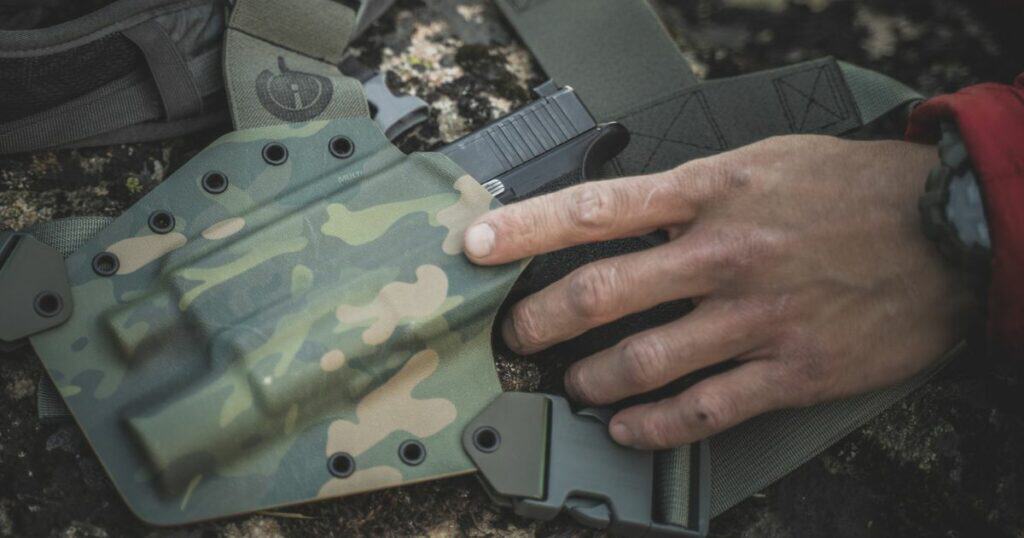
Cold temperatures can affect some holster materials and components, but that doesn’t mean your holster will hold your firearm differently.
Different holster materials respond to temperature changes in different ways. Some may become less flexible in extreme cold, while others are designed to maintain their performance across a specified temperature range. Check the manufacturer’s specifications rather than assuming your holster will become tighter, looser, or more brittle in winter conditions.
Your holster should securely retain the handgun it was designed to fit, with the firearm fully seated and the trigger protected. If retention feels different in cold weather, inspect the holster for contamination, damage, or loose components. Follow the manufacturer’s cleaning and adjustment instructions, and never force a firearm into a holster that isn’t functioning properly.
Proper retention depends on the holster’s design, condition, compatibility, and secure mounting, not temperature alone.
How Should You Check Your Holster Setup for Cold Weather Hunting?
Use this checklist to check your setup:
- Wear your complete winter hunting outfit. Put on your insulated bibs, jacket, and other layers to check whether your holster fits securely without uncomfortable pressure.
- Add your usual hunting equipment. Wear your backpack, waist belt, and other accessories to identify anything that presses against or shifts your holster.
- Check different body positions. Sit, bend, and walk around to see whether your holster stays stable and comfortable during normal movement.
- Inspect your holster components. Look for loose hardware, damage, or debris that could prevent the handgun from seating and remaining secured.
- Check your winter gloves. Make sure they’re compatible with your firearm and holster, following the manufacturer’s safety instructions.
Perform any firearm handling checks with the handgun unloaded, ammunition kept separate, and all firearm safety rules followed.
If your holster shifts, creates persistent discomfort, or doesn’t retain your firearm properly, consult the manufacturer’s instructions for approved adjustments. If those adjustments don’t resolve the problem, a different holster or mounting setup may be a better fit for your winter hunting gear.
Make Sure Your Holster Works With Your Winter Gear
Winter hunting gear can change more than how comfortable you feel outdoors. The right holster setup should account for the extra clothing, equipment, and movement involved in colder conditions without compromising safe firearm handling.
GunfightersINC offers holster options designed for different carry preferences and outdoor activities. Explore the available styles to find a setup that fits your hunting gear and how you carry.
October 29, 2026