




Out in the backcountry, packs, terrain, weather, and long hours on your feet change the rules fast. So carry decisions for your firearm start to matter a lot. A holster that feels fine around town can start working against you once you’re layered up and miles from the trailhead.
What Makes a Good Backcountry Holster?
A good backcountry holster keeps your firearm accessible without getting in the way of movement, packs, or safety gear. A hiking holster or hunting holster has to work while you’re moving, layered up, and carrying real weight.
Here’s what actually matters.
- Access while wearing a pack. You should be able to draw without loosening shoulder straps or shifting a waist belt.
- Stability during long movement. A holster that bounces, shifts, or pulls away from your body becomes a problem fast.
- Comfort over hours or days. Comfort is not about padding alone. It’s about weight distribution and pressure points.
- Protection from weather and brush. Backcountry carry means rain, snow, dirt, and branches.
How Different Carry Methods Hold Up
Once you understand what a backcountry holster needs to do, the next step is to look at how common carry methods perform to determine what works best.
Waist Carry
Waist carry works well for everyday use, short walks, and standing. The issue is waist carry is built around a belt line, and outdoor activities put a lot of pressure on that area. So once you add packs, terrain, and hours of movement, its limits show up fast.
- Belt pressure points – A loaded pack already transfers weight to your hips. Adding a firearm to the same spot stacks more load in one place.
- Interference with pack waist belts – Most pack waist belts sit directly over your waistline, so you either trap the holster under the belt or push it outward. Both options reduce stability and slow access.
- Hard access when seated or scrambling – Waist carry works best when you’re upright and still. Once you sit, climb, or scramble on uneven ground, access becomes awkward or blocked.
- Restricted access with layers – Cold weather clothing and rain gear add bulk fast. Each layer makes it harder and slower to draw.
Chest Carry
Chest carry keeps the firearm in a fixed, reachable position, regardless of what you’re wearing or carrying. Packs, chest straps, layers, and even waders don’t block access or force workarounds. The holster stays where your hands expect it to be.
- No belt pressure points – Chest carry spreads the load across stronger muscle groups, which helps reduce soreness and fatigue over long hikes.
- Clear of pack waist belts – Because the holster sits above the belt line, pack waist belts don’t trap or displace it.
- Access when seated or climbing – Whether you’re glassing from a hillside or stepping over deadfall, the holster stays in the same place.
- Works with layers and weather gear – The draw stays consistent because the holster isn’t buried under clothing or straps.
Chest carry is the right direction for most backcountry trips, but the details of the setup still matter.
Choosing a Chest Holster
A solid backcountry setup should:
- Stay stable while hiking, climbing, and glassing
- Adjust easily for layers and seasonal clothing
- Integrate with gear, like chest packs or bino harnesses
- Keep the firearm secure without making access complicated
If any part of the system fights your pack or forces constant adjustment, it becomes another problem to manage instead of a solution.
This is where purpose-built chest holsters matter.
Chest Holster Systems From GunfightersINC
GunfightersINC chest holsters are designed around real backcountry use. Not just carry, but movement, load, and long days outside.
Kenai Chest Holster
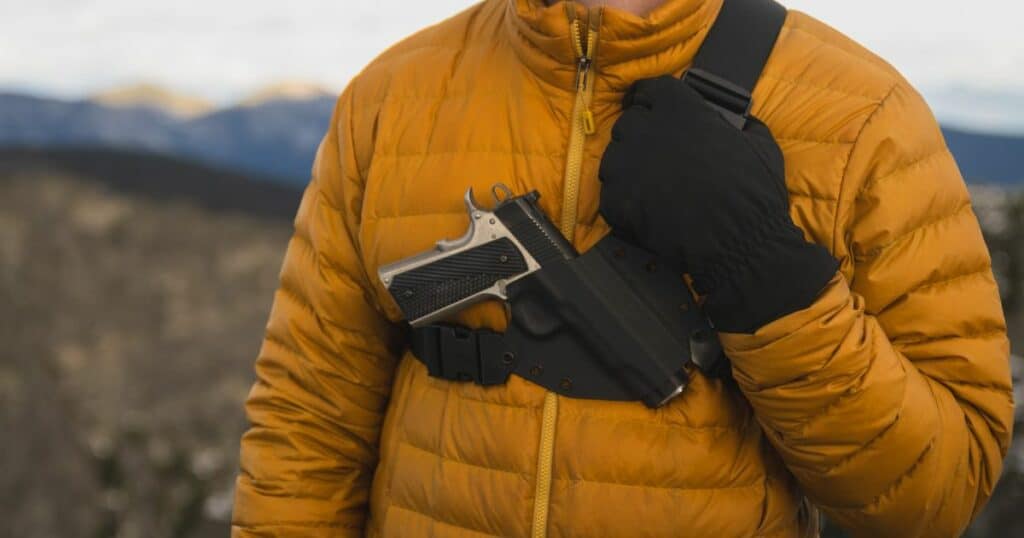
The Kenai is built specifically for hiking, hunting, and guiding. It keeps the firearm centered and stable while you’re moving, adjusts easily for different layers, and stays accessible with packs and chest straps in place.
For many users, it becomes the default backcountry holster because it works across various seasons and terrains without requiring constant adjustments.
Bino-Link Holster
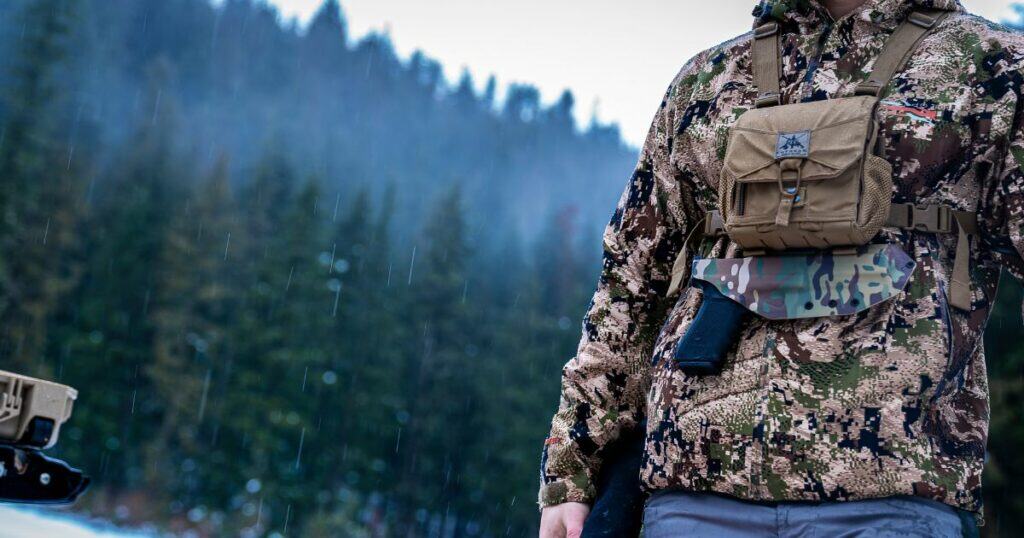
For hunters running a bino harness, the Bino-Link connects your holster directly to that setup. Optics and sidearm stay accessible without stacking straps or crowding the chest. Everything works together, rather than competing for space.
Tackle-Link Holster
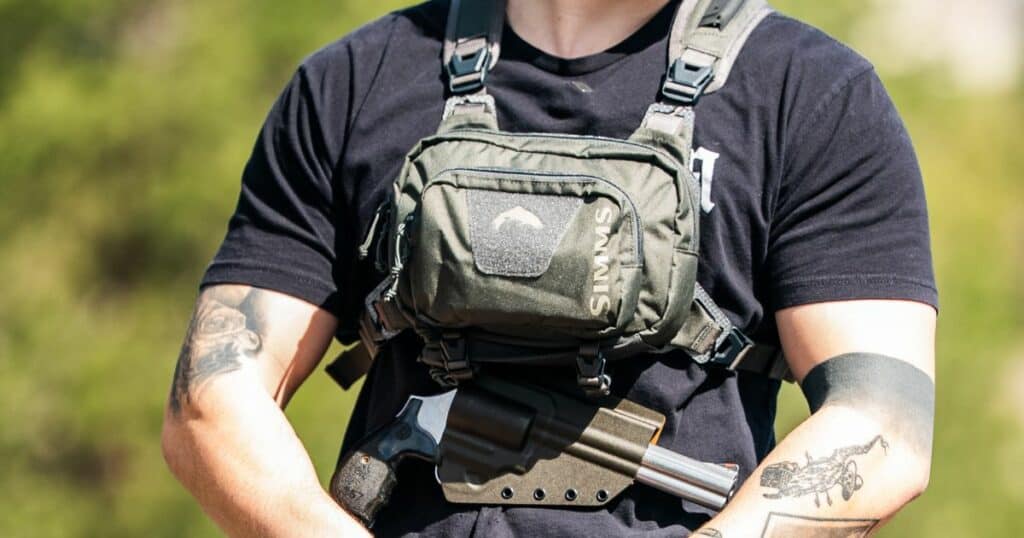
The Tackle-Link is designed to attach directly to tackle chest packs, making it a good fit for fishing and other gear-forward activities. Instead of adding another harness, it integrates into what you’re already wearing.
Check out our other guides for more about these holsters:
- Tackle-Link vs. Bino-Link
- The Tackle-Link Holster: A Game-Changer for Fishing
- Carrying a Pistol with a Bino Harness
Carry Gear That Works as Hard as You Do
If you’re dialing in a backcountry setup, focus on carry systems designed for real movement and long days outside. And choose gear that earns its place mile after mile.
February 23, 2026